
Temperature
Treat the number as a maximum.
Do not raise the temperature because the textile looks heavily soiled. Select a process that stays within the limit shown on the label.
Care guide
First rule
Fibre content describes what a textile contains. The sewn-in label specifies the permitted processes for that particular item. Use this guide to read the label and prepare without guessing.
Start with the pre-wash checkThe label supplied with the product takes priority over online advice, household habits, and assumptions based only on fibre content.
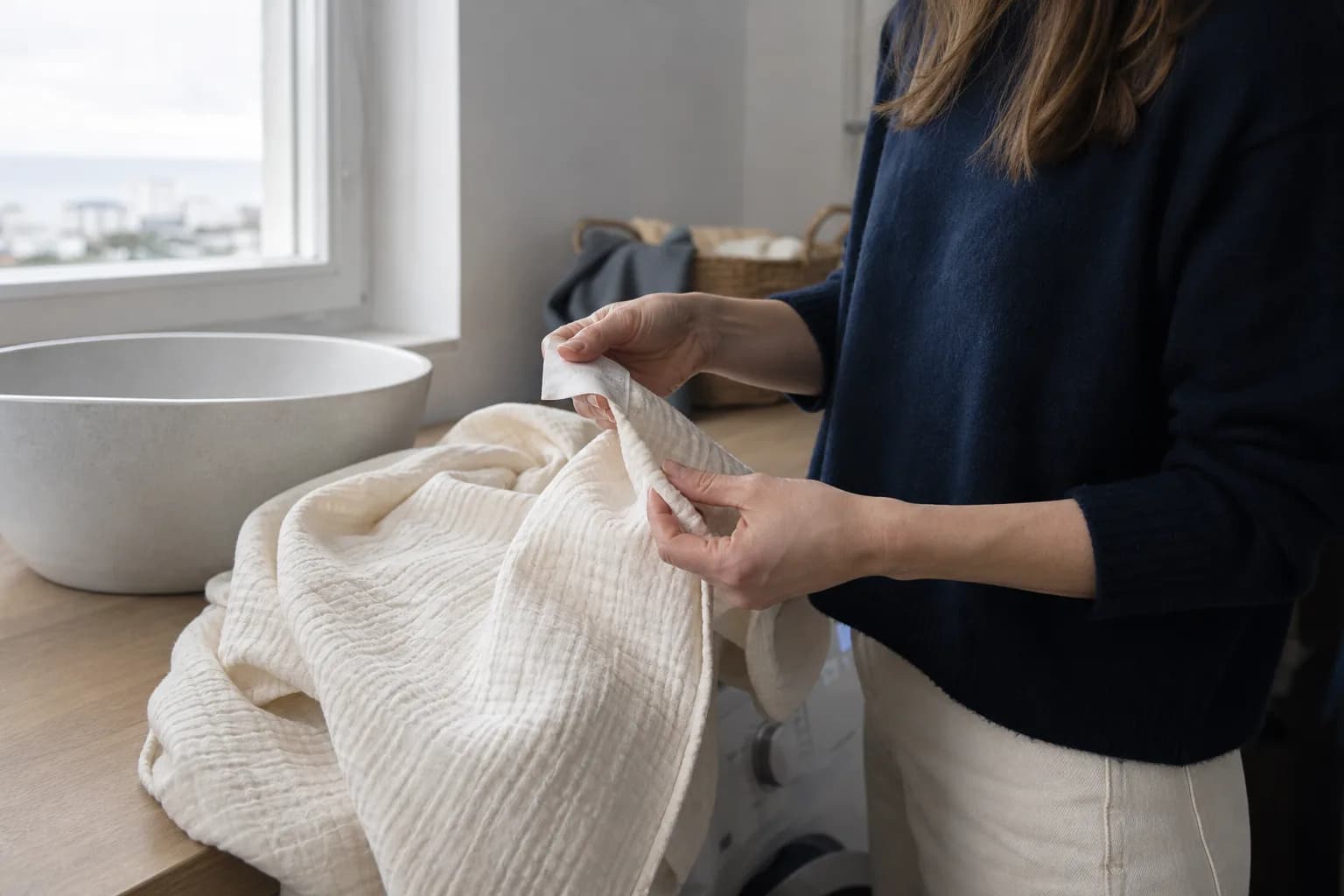
Do not guess
Read the complete set of symbols.
One minute before washing
If the label is missing or unreadable, pause and identify the exact product before choosing a process.
Read the symbols for washing, bleaching, drying, ironing, and professional care together. A number in the wash symbol is a maximum, not a target.
Compare the dry item with the washing-machine capacity and instructions. A bulky or heavy textile needs enough room to move without overloading the appliance.
Separate items when colour transfer, lint, weight, or different care limits could cause a problem. Follow any product-specific instruction to wash separately.
Use a detergent permitted by the care label and follow its dose instructions. More detergent does not automatically mean a cleaner result.
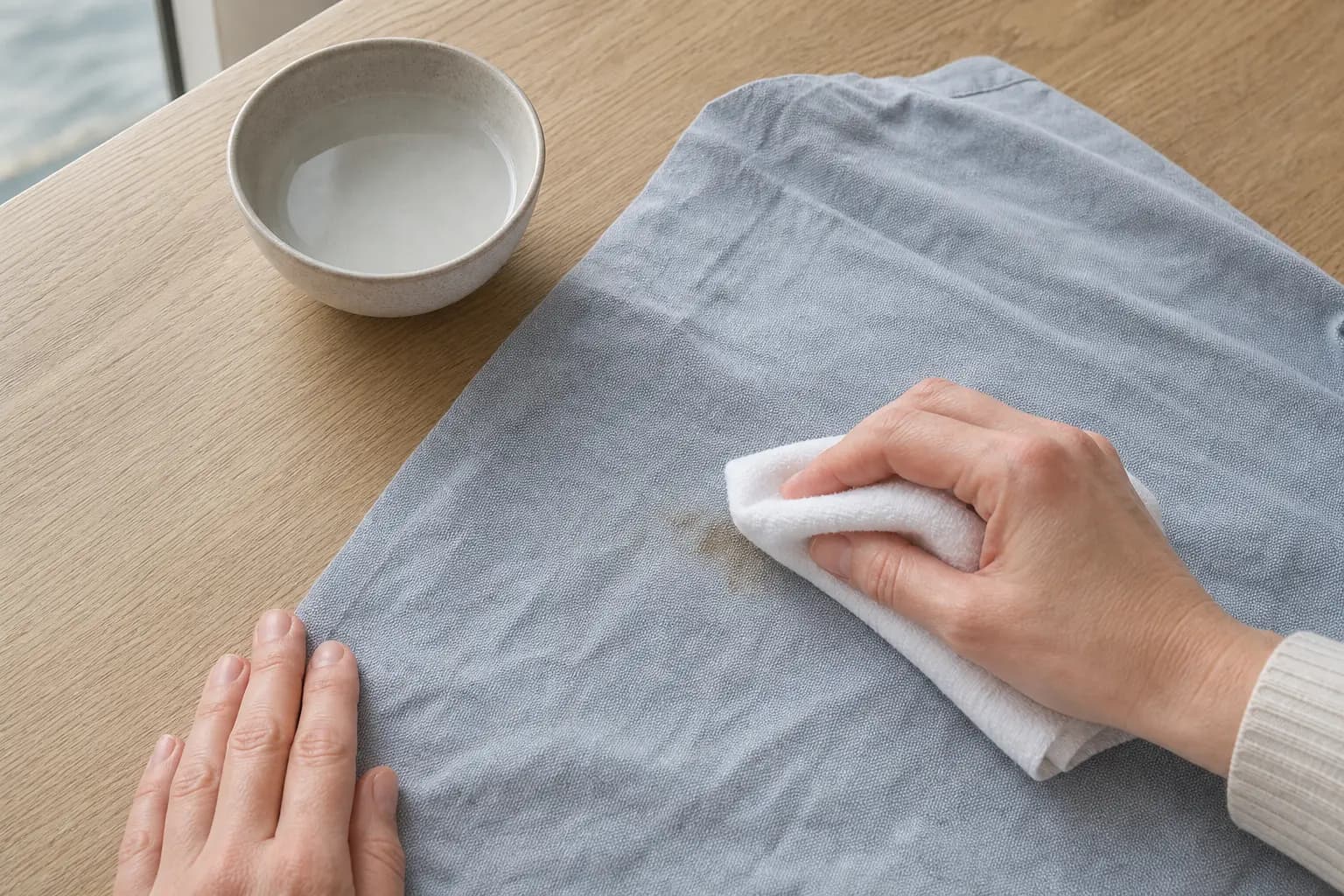
A fresh spill
Lift excess first; avoid spreading it.
Spot care
A treatment that is suitable for one textile may damage another finish or dye. Start with the label and the instructions for the cleaning product you intend to use.
Wash and dry
Two textiles with the same fibre can have different construction, dye, finish, and care limits. Apply the complete instruction for the specific item.
Temperature
Do not raise the temperature because the textile looks heavily soiled. Select a process that stays within the limit shown on the label.
Mechanical action
They indicate a milder process. Choose the corresponding cycle and leave enough room for the textile to move.
Drying
Do not assume tumble drying is allowed. Dots indicate heat limits when it is permitted; other symbols specify natural drying methods.
After washing
Wet textiles can be heavier and easier to stretch. Support the item during handling and use only the drying method allowed by its label.

Only when the label directs it
Support the textile while it dries.
Reference material
These sources explain standardized care symbols and general laundry preparation. They do not replace the label on your item.
Meaning of textile-care symbols and the principle that they show the maximum permitted treatment.
Open sourceGeneral preparation covering sorting, care labels, stains, detergent, and cycle selection.
Open sourceContact support before washing. Include the product name, variant, and order reference so the correct instruction can be identified.